
Dermatology Trainee Advocacy Day 101:
A step-by-step framework for building a team, designing curriculum, and sustaining momentum.
DTAD 101


STEP 1
BUILD
Strong advocacy starts with shared ownership.
CORE ROLES
Assemble a state-representative leadership team.
Medical students (primary organizers)
Residents or fellows (near-peer leadership)
Faculty advisors (credibility and continuity)
Program representatives (statewide reach)
TEAM STRUCTURE
Structure matters more than size.
Define roles early
Share ownership across institutions
Secure faculty buy-in from the start
SUCCESS LOOKS LIKE
✓ Roles are defined
✓ Leadership is confirmed
STEP 2
PLAN
Momentum comes from predictable structure.
01
SET THE DATE
Choose a date early and plan backward.
• Decide virtual vs in-person
• Avoid exam blocks and conferences
• Lock the date before building content
02
WORK BACKWARDS
Advocacy Day is the deadline.
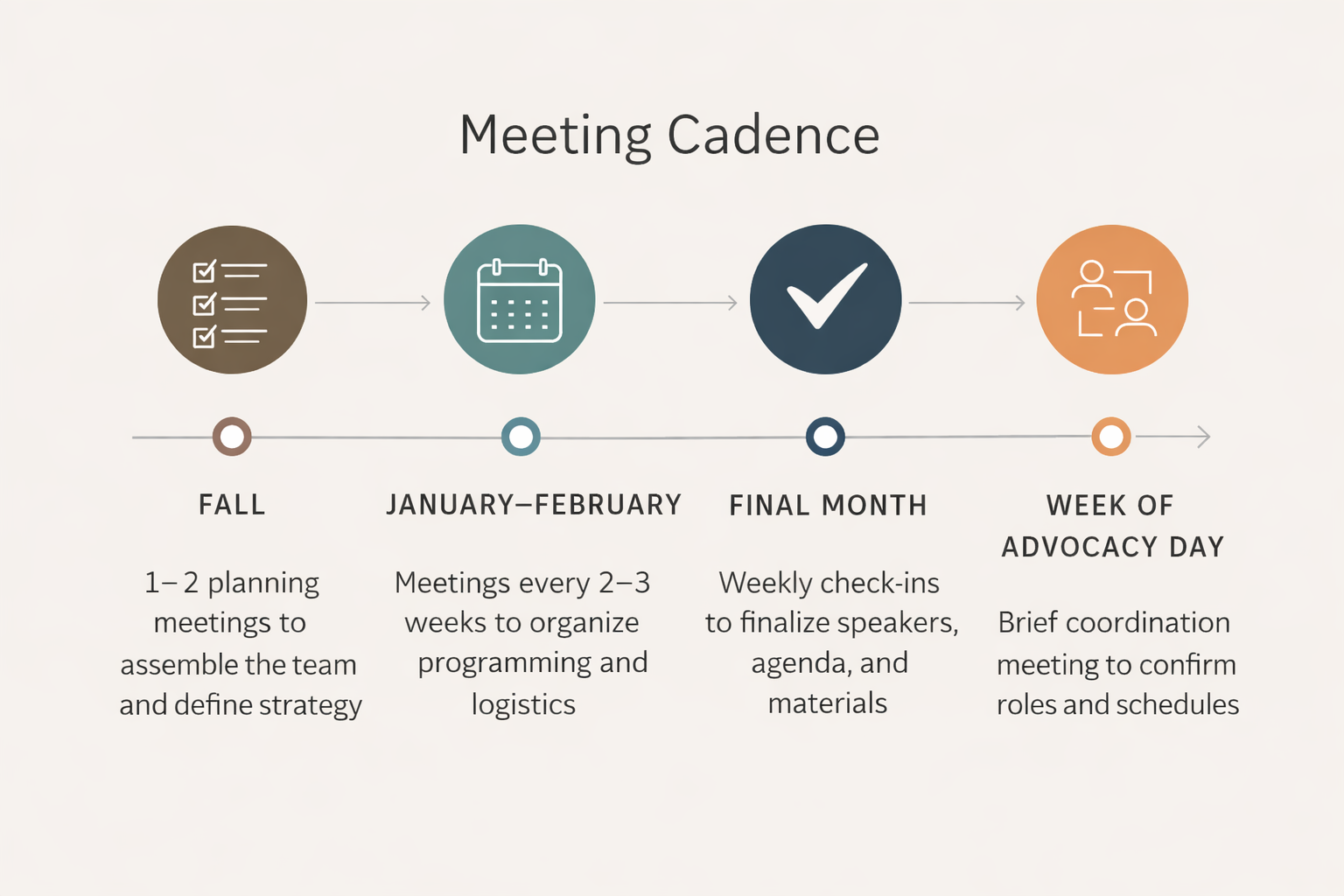
• Fall: define goals and scope
• Winter: confirm speakers and format
• Final month: finalize logistics
Fewer, focused meetings work best.
• Early on monthly
• Biweekly as the event approaches
• Brief check-in the week of
MEETING CADENCE
03

SUCCESS LOOKS LIKE
✓ Date and format confirmed
✓ Speakers finalized
✓ Agenda aligned
STEP 3
DESIGN
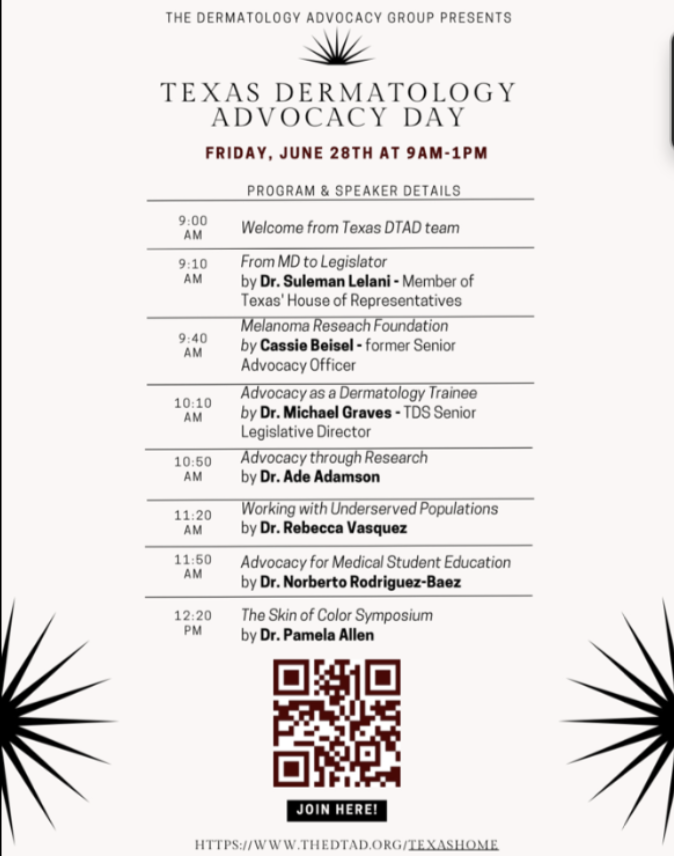
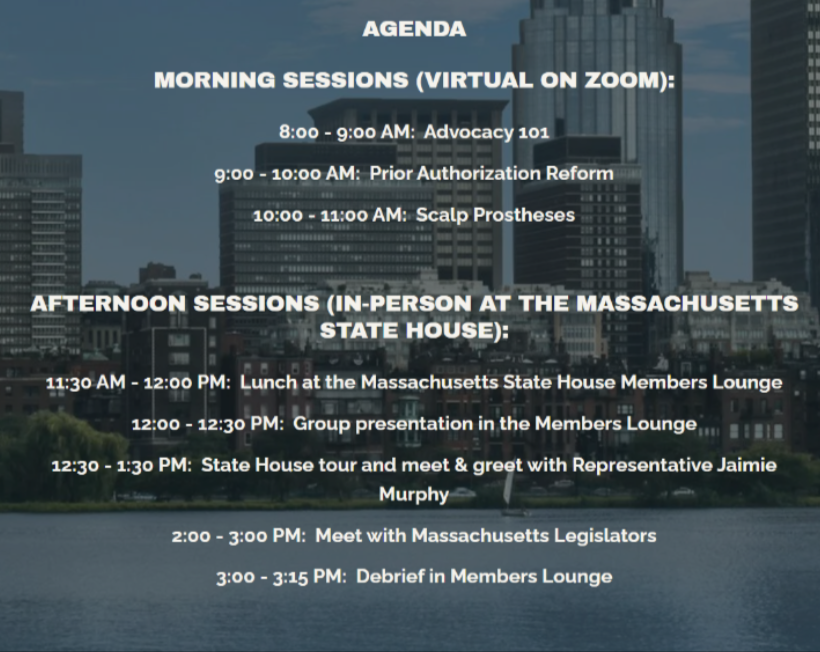
Intentional programming makes advocacy accessible.
01
DEFINE OBJECTIVES
Decide what participants should be able to understand by the end of the day.
02
BALANCE EDUCATION & ADVOCACY
Include both background education (policy context, dermatology issues) and applied advocacy skills.
03
select session formats
Choose a mix that fits your audience:
• Short lectures
• Panel discussions
• Advocacy skill workshops
• Legislator or policy expert Q&A
align with timeline
04
Design content only after date and format are confirmed.
SUCCESS LOOKS LIKE
✓ A clear, participant-focused program aligned with advocacy goals
STEP 4
PUBLICIZE
Strong turnout starts with clear messaging.
01
IDENTIFY AUDIENCE
Medical students, residents, faculty, and institutional partners.
choose promotion CHANNELS
02
• Email lists and listservs
• Student and residency leadership
• Social media and interest groups
03
set expectations early
Choose a mix that fits your audience:
• Short lectures
• Panel discussions
• Advocacy skill workshops
• Legislator or policy expert Q&A
open registration early
04
Use a simple registration process and confirm attendance before finalizing logistics.
SUCCESS LOOKS LIKE

✓ A confirmed participant list with clear expectations
STEP 5
ADVOCATE
Preparation turns participation into impact.
01
ORIENT PARTICIPANTS
Briefly review goals, schedule, and expectations.
02
FACILITATE ADVOCACY ENGAGEMENT
03
• Policy discussions
• Legislative meetings or simulations
• Guided advocacy activities
04
DELIVER PROGRAM
Follow planned agenda while allowing flexibility for discussion.
SUPPORT PARTICIPANTS
Ensure faculty or experienced advocates are available to guide conversations.
SUCCESS LOOKS LIKE
✓ Participants leave informed, confident, and engaged in advocacy
STEP 6
SUSTAIN
Save agendas, timelines, materials, and contacts.
Continuity is what makes advocacy durable.
DOCUMENT THE PROCESS
01
MAINTAIN RELATIONSHIPS
03
Continue communication with faculty, institutions, and partners.
TRANSITION LEADERSHIP INTENTIONALLY
02
04
Identify future leaders early and involve them in planning.
REFLECT AND REFINE
Review what worked and what should change next year.
SUCCESS LOOKS LIKE
✓ A repeatable model that improves year to year